




Waterpark Simulator is a creative park management game where players design, expand, and manage their own water-themed amusement park. Unlike fast-paced action games, Waterpark Simulator challenges players with strategic planning, financial management, visitor satisfaction, and efficient park layout design. Your goal is not just to build exciting slides but to maintain a thriving business that keeps guests entertained and returning for more.
The deeper you progress into the game, the more complex the park management becomes. Balancing ride excitement, staff efficiency, safety systems, maintenance, and profits requires careful decision-making. This Tips & Guides article will walk you through the entire progression of Waterpark Simulator—from early construction decisions to advanced park optimization—so you can build the ultimate waterpark empire.
<h2>1. Understanding the Core Gameplay Systems</h2>
Waterpark Simulator revolves around a management loop where players build attractions, manage finances, attract visitors, and continuously upgrade the park. Every ride, decoration, and facility contributes to guest satisfaction and overall park rating.
Players must balance creativity with practicality. A park filled with exciting rides but lacking essential services such as food stalls, restrooms, and lifeguards will quickly frustrate visitors and damage your reputation.
<h3>Main Gameplay Elements</h3>
- Attraction construction and upgrades
- Visitor satisfaction management
- Financial income and expenses
- Staff hiring and park maintenance
<h4>Why Planning Matters</h4>
A well-organized park layout reduces crowd congestion and improves visitor happiness.

<h2>2. Starting Your First Waterpark Successfully</h2>
The early stages of Waterpark Simulator determine how smoothly your park will grow later. Many players rush to build large attractions immediately, which often leads to financial instability.
Instead, start with a small but efficient layout. Focus on building essential facilities and a few popular attractions that generate steady income.
<h3>Early Park Construction Priorities</h3>
- Build one or two simple slides
- Add restrooms and food stalls
- Install seating and relaxation areas
<h4>Common Beginner Mistakes</h4>
- Spending too much money early
- Ignoring guest comfort facilities
- Placing rides too close together
<h2>3. Designing Efficient Park Layouts</h2>
Layout design is crucial in Waterpark Simulator. A poorly planned park causes crowding, long lines, and unhappy guests.
Efficient layouts ensure smooth movement across the park and easy access to attractions.
<h3>Layout Design Tips</h3>
- Separate ride zones and relaxation areas
- Place food stalls near high-traffic areas
- Maintain clear walking paths
<h4>Visitor Flow Strategy</h4>
Guests should be able to move between attractions without excessive walking distances.
<h2>4. Choosing the Best Water Attractions</h2>
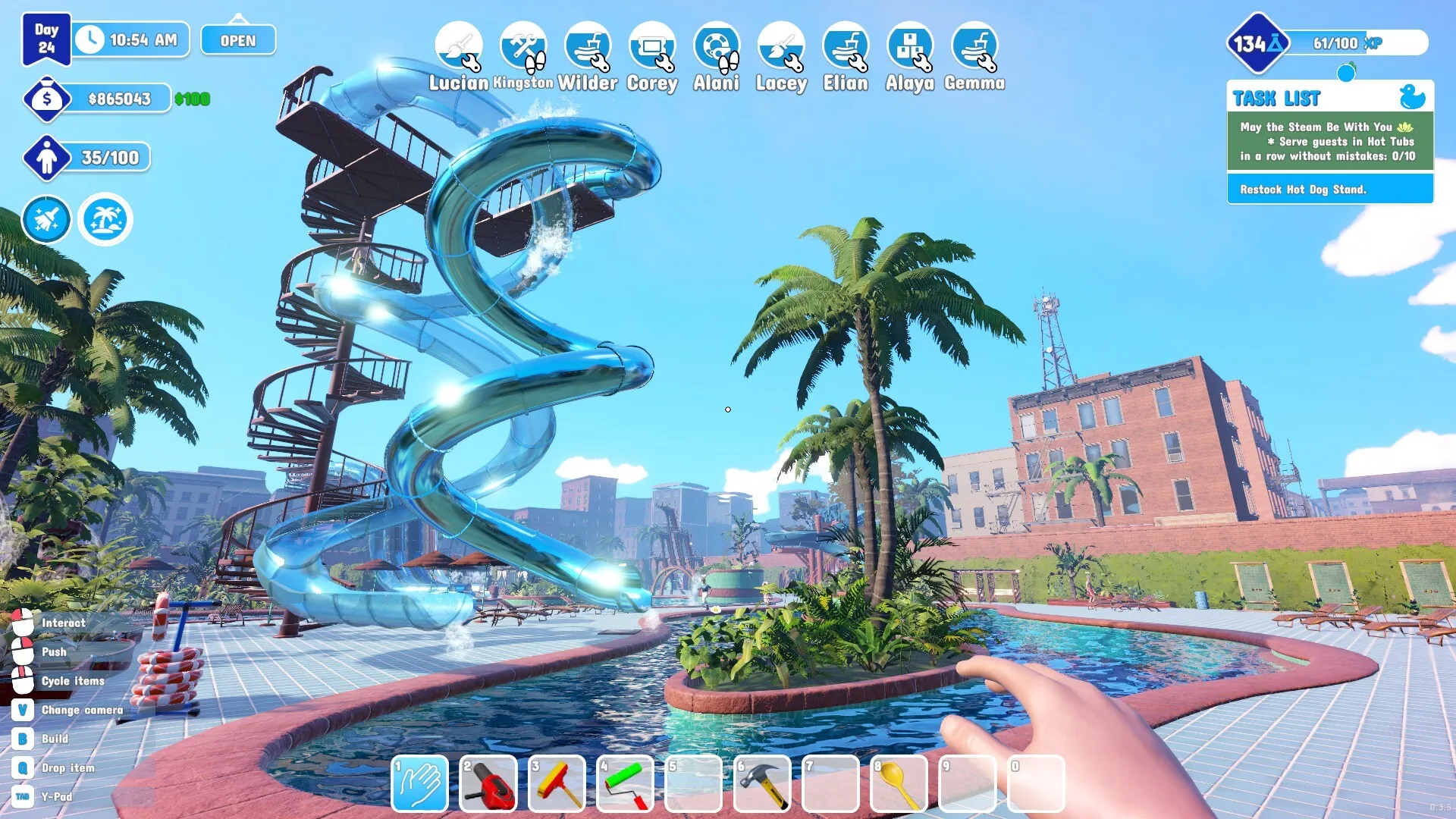
Not all attractions are equal in Waterpark Simulator. Some rides generate high excitement but require significant maintenance and staffing.
Balancing thrill rides with family-friendly attractions creates a broader visitor appeal.
<h3>Types of Water Attractions</h3>
- High-speed slides
- Wave pools
- Lazy rivers
- Family splash zones
<h4>Attraction Balance Rule</h4>
Offer a mix of thrilling rides and relaxing experiences.
<h2>5. Managing Park Finances Effectively</h2>
Financial management determines whether your park thrives or collapses. Players must monitor income sources and control operating costs.
Ticket prices, ride maintenance, staff salaries, and facility upkeep all affect profitability.
<h3>Key Revenue Sources</h3>
- Entrance tickets
- Food and merchandise sales
- Premium attractions
<h4>Cost Control Strategy</h4>
Upgrade attractions gradually rather than expanding too quickly.
<h2>6. Hiring Staff and Maintaining Park Safety</h2>
Staff members are essential for smooth park operations. Lifeguards, cleaners, and technicians ensure safety and cleanliness.
Understaffed parks often suffer from accidents, trash buildup, and broken attractions.
<h3>Essential Staff Roles</h3>
- Lifeguards for pool safety
- Maintenance workers for ride repairs
- Janitors for cleanliness
<h4>Staff Placement Tip</h4>
Position staff strategically in busy areas to maximize efficiency.
<h2>7. Increasing Visitor Satisfaction</h2>
Happy guests spend more money and return to the park. Visitor satisfaction depends on comfort, entertainment, and convenience.
Long waiting lines, dirty areas, or malfunctioning rides quickly reduce park ratings.
<h3>Improving Guest Experience</h3>
- Install shade areas
- Reduce ride wait times
- Provide diverse food options
<h4>Guest Behavior Insight</h4>
Visitors tend to gather near the most exciting attractions, so nearby facilities are essential.
<h2>8. Expanding the Park and Unlocking New Content</h2>
As your park becomes successful, expansion opportunities unlock. New rides, decorative themes, and advanced facilities allow players to grow their park further.
Expansion should be strategic rather than purely cosmetic.
<h3>Expansion Planning</h3>
- Unlock high-profit attractions
- Build themed zones
- Improve infrastructure
<h4>Growth Strategy</h4>
Expand slowly while maintaining visitor satisfaction.
<h2>9. Mid-Game Optimization and Efficiency</h2>
During mid-game stages, managing large crowds becomes the primary challenge. Efficient ride placement and staffing are crucial.
Analyzing visitor behavior can help optimize park performance.
<h3>Optimization Techniques</h3>
- Relocate underperforming attractions
- Upgrade popular rides
- Improve walking path efficiency
<h4>Operational Tip</h4>
Monitor park statistics to identify problem areas.
<h2>10. Late-Game Mastery and Building the Ultimate Waterpark</h2>
Late-game Waterpark Simulator focuses on maximizing park reputation and profit. At this stage, players can create massive themed parks with complex ride systems.
Master players focus on aesthetics, efficiency, and guest experience simultaneously.
<h3>Advanced Park Features</h3>
- Mega water slides
- Large wave arenas
- Luxury relaxation zones
<h4>Mastery Philosophy</h4>
A great park balances excitement, comfort, and visual appeal.
Conclusion
Waterpark Simulator offers a relaxing yet deeply strategic experience where creativity meets management skills. Building a successful park requires more than exciting slides—it demands smart financial planning, efficient layouts, skilled staff management, and continuous improvements to visitor satisfaction.
By following the strategies outlined in this guide, players can develop their parks gradually while avoiding common mistakes. From humble beginnings with a few slides to a massive entertainment complex filled with thrilling attractions, Waterpark Simulator rewards careful planning and thoughtful expansion. With patience and creativity, you can transform your park into the ultimate aquatic paradise.